Tensile Overload Failure
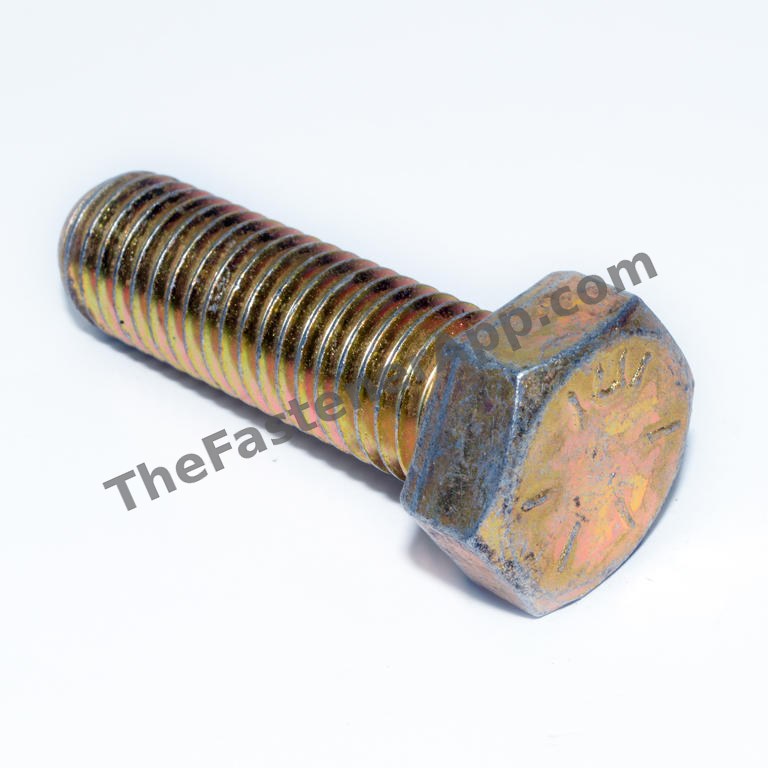
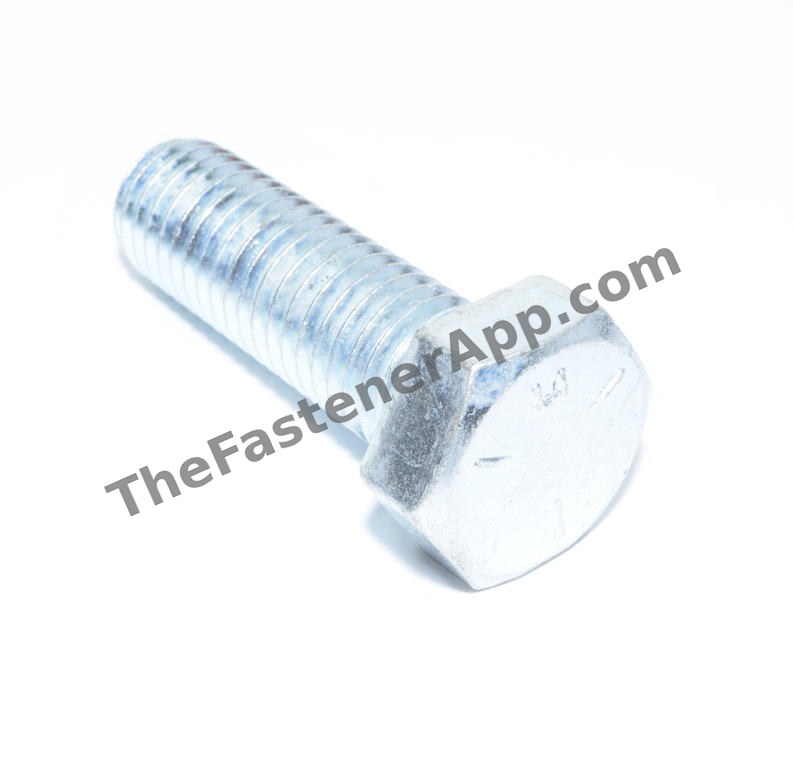
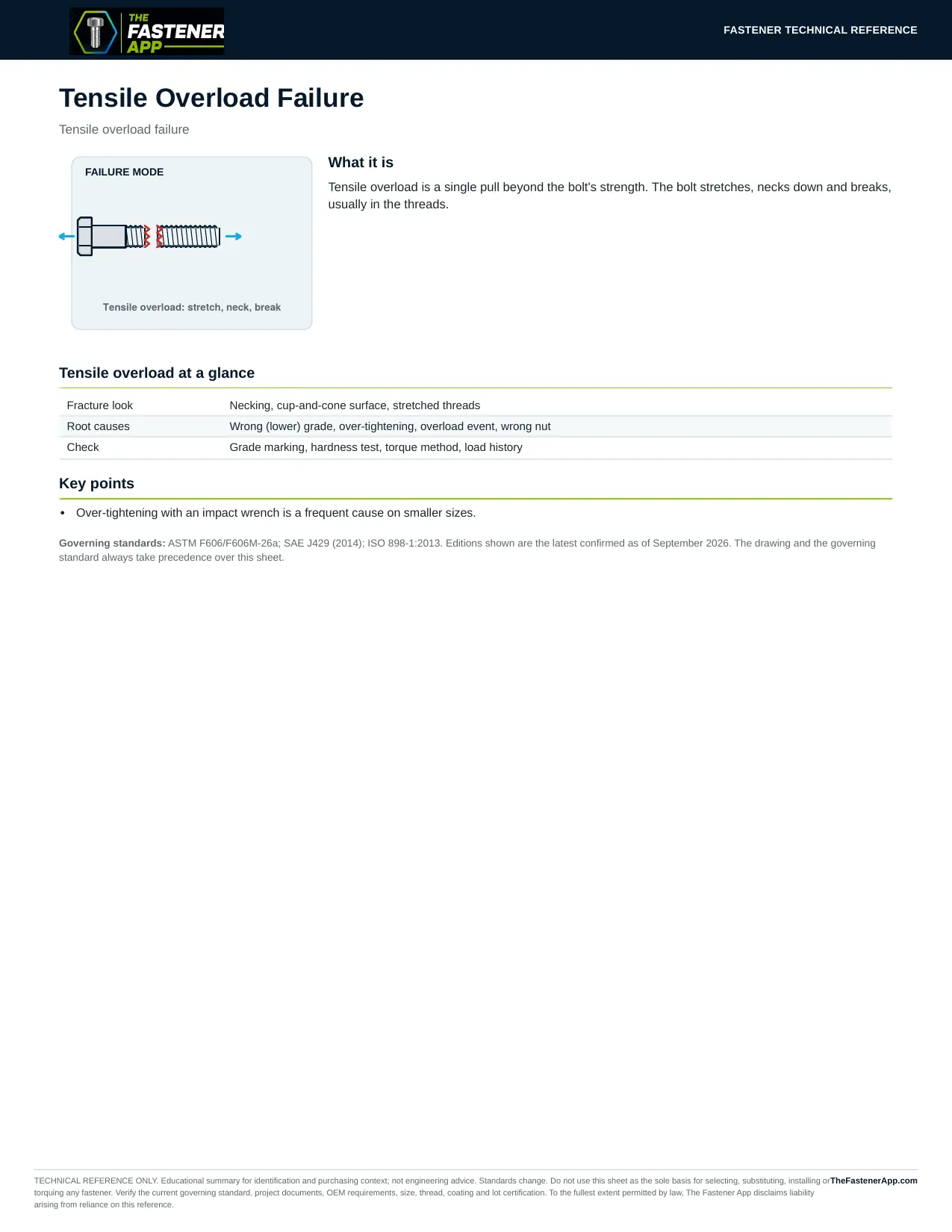
Tensile overload is a single pull beyond the bolt's strength. The bolt stretches, necks down and breaks, usually in the threads.
Tensile overload at a glance
| Fracture look | Necking, cup-and-cone surface, stretched threads |
|---|---|
| Root causes | Wrong (lower) grade, over-tightening, overload event, wrong nut |
| Check | Grade marking, hardness test, torque method, load history |
These tables carry the same figures as the printed sheet below.
The printed sheet
See an error on this sheet?
Tell us what is wrong.
Text version of this sheet
Tensile overload failure
What it is
FAILURE MODE
Tensile overload is a single pull beyond the bolt's strength. The bolt stretches, necks down and breaks,
usually in the threads.
Tensile overload: stretch, neck, break
Tensile overload at a glance
Fracture look
Necking, cup-and-cone surface, stretched threads
Root causes
Wrong (lower) grade, over-tightening, overload event, wrong nut
Check
Grade marking, hardness test, torque method, load history
Key points
Over-tightening with an impact wrench is a frequent cause on smaller sizes.
Governing standards: ASTM F606/F606M-26a; SAE J429 (2014); ISO 898-1:2013. Editions shown are the latest confirmed as of September 2026. The drawing and the governing
standard always take precedence over this sheet.
torquing any fastener. Verify the current governing standard, project documents, OEM requirements, size, thread, coating and lot certification. To the fullest extent permitted by law, The Fastener App disclaims liability
arising from reliance on this reference.
Fastener Guide reference FG-FE6881 · thefastenerapp.com/fastener-guide/failure-analysis/tensile-overload-failure · © The Fastener App. Reference only — verify the current governing standard, drawing and manufacturer data before specifying or installing.