Shear Failure
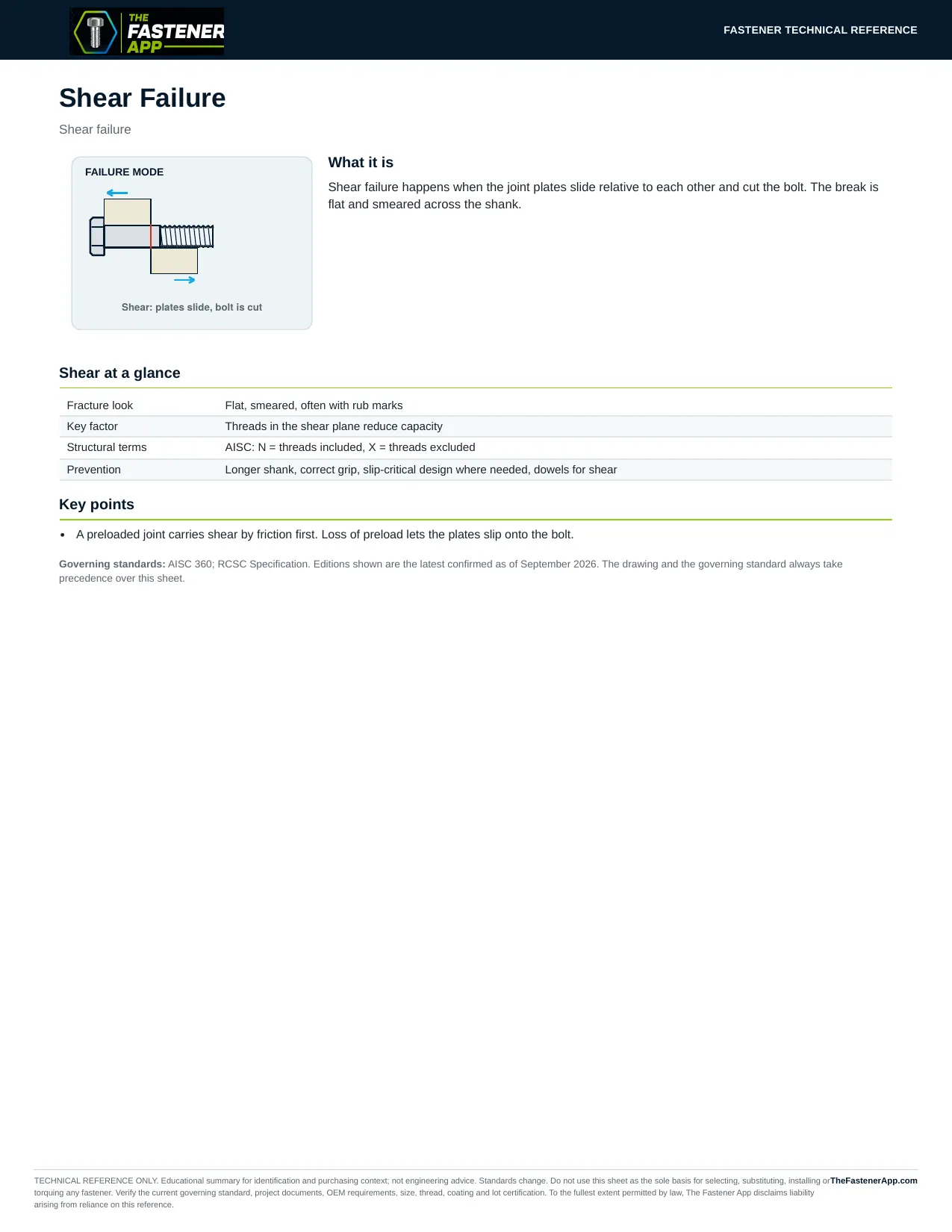
Shear failure happens when the joint plates slide relative to each other and cut the bolt. The break is flat and smeared across the shank.
Shear at a glance
| Fracture look | Flat, smeared, often with rub marks |
|---|---|
| Key factor | Threads in the shear plane reduce capacity |
| Structural terms | AISC: N = threads included, X = threads excluded |
| Prevention | Longer shank, correct grip, slip-critical design where needed, dowels for shear |
These tables carry the same figures as the printed sheet below.
The printed sheet
See an error on this sheet?
Tell us what is wrong.
Text version of this sheet
Shear failure
What it is
FAILURE MODE
Shear failure happens when the joint plates slide relative to each other and cut the bolt. The break is
flat and smeared across the shank.
Shear: plates slide, bolt is cut
Shear at a glance
Fracture look
Flat, smeared, often with rub marks
Key factor
Threads in the shear plane reduce capacity
Structural terms
AISC: N = threads included, X = threads excluded
Prevention
Longer shank, correct grip, slip-critical design where needed, dowels for shear
Key points
A preloaded joint carries shear by friction first. Loss of preload lets the plates slip onto the bolt.
Governing standards: AISC 360; RCSC Specification. Editions shown are the latest confirmed as of September 2026. The drawing and the governing standard always take
precedence over this sheet.
torquing any fastener. Verify the current governing standard, project documents, OEM requirements, size, thread, coating and lot certification. To the fullest extent permitted by law, The Fastener App disclaims liability
arising from reliance on this reference.
Fastener Guide reference FG-47B216 · thefastenerapp.com/fastener-guide/failure-analysis/shear-failure · © The Fastener App. Reference only — verify the current governing standard, drawing and manufacturer data before specifying or installing.