#28 FASTENER FAILURE ANALYSIS
Printable shop wall chart: #28 FASTENER FAILURE ANALYSIS. Free letter-size PDF to print and post at the counter; 25 x 36 inch poster version available.
Reading the break
| What you see | Likely mode | First question |
|---|---|---|
| Beach marks, smooth zone then rough zone | Fatigue | Was preload lost or too low? |
| Necking, cup-and-cone, stretched threads | Tensile overload | Was the load or grade wrong? |
| Flat smeared face across the shank | Shear | Were threads in the shear plane? |
| Bright crystalline face, no stretch, delayed | Hydrogen embrittlement | Was it electroplated and hard? |
| Branching cracks, corrosion product | Stress corrosion cracking | What was the environment? |
| Threads wiped off, bolt intact | Stripping | Was engagement too short or the nut weak? |
Evidence checklist
| Step | Why |
|---|---|
| Photograph in place before removal | Location and orientation are lost once moved |
| Do not fit fracture faces together | Contact damages the evidence |
| Do not clean, wire-brush or oil fractures | Destroys marks and corrosion clues |
| Bag and label each piece separately | Keeps location and sequence |
| Keep mating nuts, washers and parts | Often where the cause is |
| Record torque, tool, date and installer | Installation history |
| Quarantine the lot and keep unused parts | Allows testing of the same lot |
| Keep certs and packaging labels | Traceability to manufacturer and heat |
Most bolt failures are joint failures: lost preload, wrong grade or the environment. Quarantine the lot before replacing parts.
These tables carry the same figures as the printed sheet below.
The printed sheet
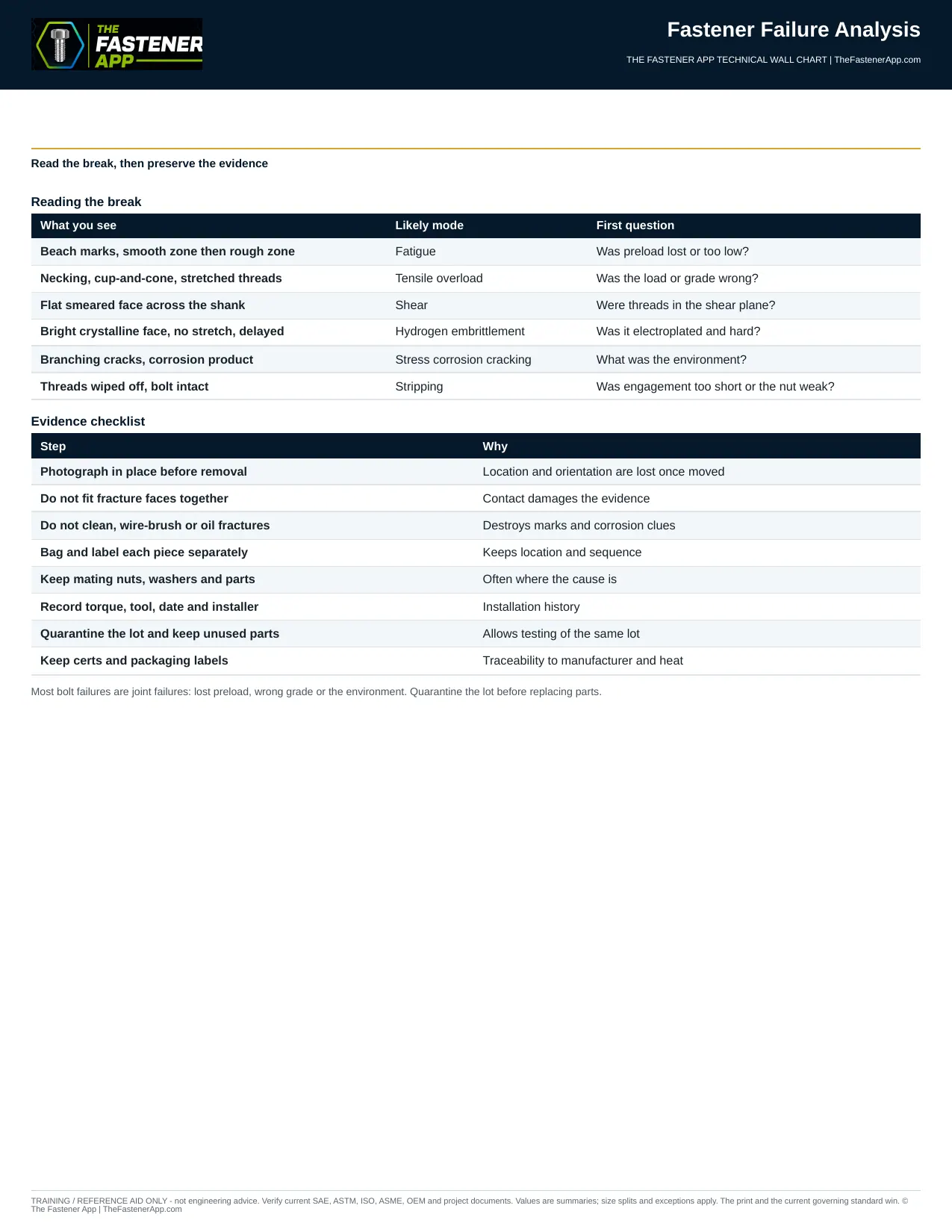
25 x 36 inch poster version
For the full-size shop poster, tell us where to send it.
See an error on this sheet?
Tell us what is wrong.
Text version of this sheet
Fastener Failure Analysis
Read the break, then preserve the evidence
Reading the break
What you see
Likely mode
First question
Beach marks, smooth zone then rough zone
Fatigue
Was preload lost or too low?
Necking, cup-and-cone, stretched threads
Tensile overload
Was the load or grade wrong?
Flat smeared face across the shank
Shear
Were threads in the shear plane?
Bright crystalline face, no stretch, delayed
Hydrogen embrittlement
Was it electroplated and hard?
Branching cracks, corrosion product
Stress corrosion cracking
What was the environment?
Threads wiped off, bolt intact
Stripping
Was engagement too short or the nut weak?
Evidence checklist
Step
Why
Photograph in place before removal
Location and orientation are lost once moved
Do not fit fracture faces together
Contact damages the evidence
Do not clean, wire-brush or oil fractures
Destroys marks and corrosion clues
Bag and label each piece separately
Keeps location and sequence
Keep mating nuts, washers and parts
Often where the cause is
Record torque, tool, date and installer
Installation history
Quarantine the lot and keep unused parts
Allows testing of the same lot
Keep certs and packaging labels
Traceability to manufacturer and heat
Most bolt failures are joint failures: lost preload, wrong grade or the environment. Quarantine the lot before replacing parts.
The Fastener App | TheFastenerApp.com
Fastener Guide reference FG-71233F · thefastenerapp.com/fastener-guide/wall-charts/28-fastener-failure-analysis · © The Fastener App. Reference only — verify the current governing standard, drawing and manufacturer data before specifying or installing.