Lock Washers and Locking Methods
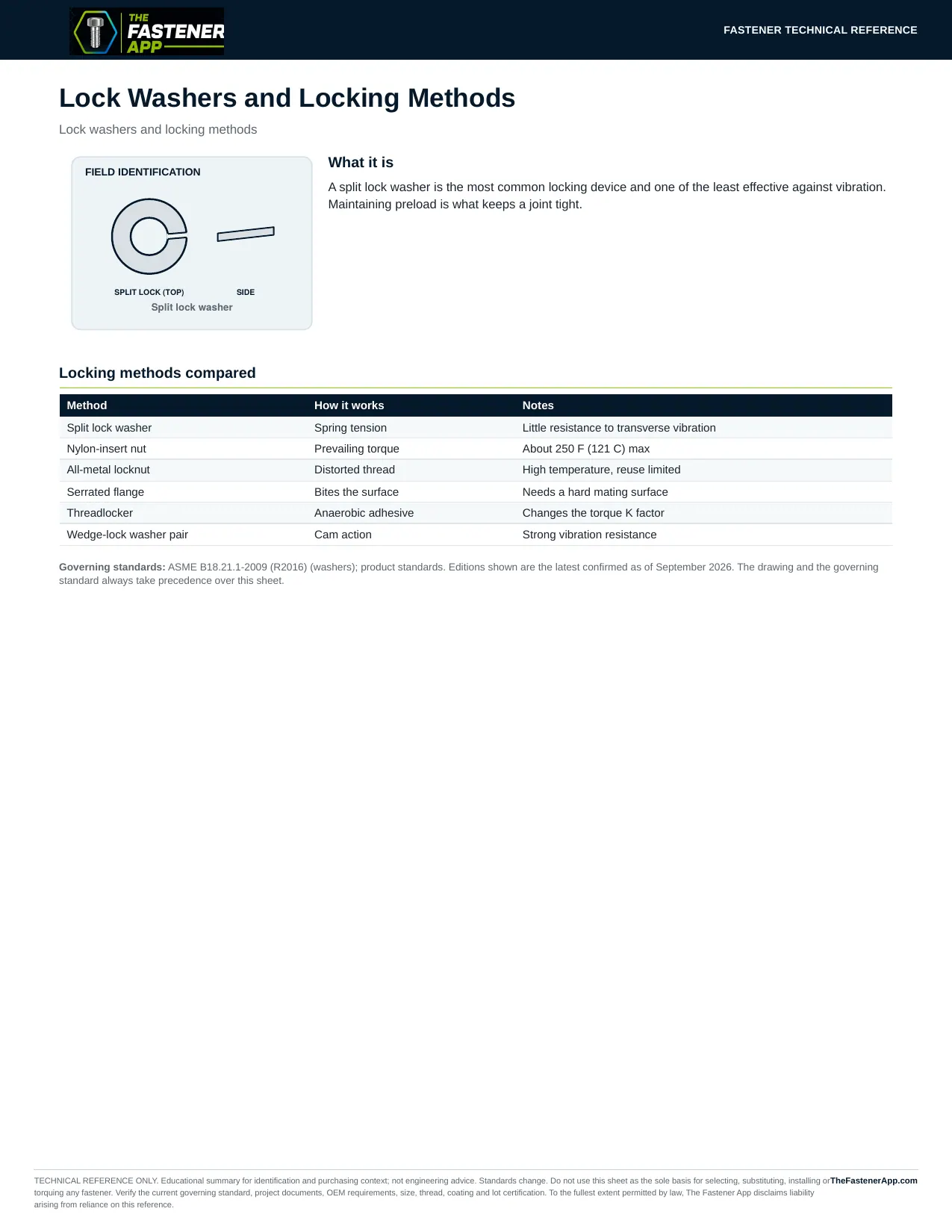
A split lock washer is the most common locking device and one of the least effective against vibration. Maintaining preload is what keeps a joint tight.
Locking methods compared
| Method | How it works | Notes |
|---|---|---|
| Split lock washer | Spring tension | Little resistance to transverse vibration |
| Nylon-insert nut | Prevailing torque | About 250 F (121 C) max |
| All-metal locknut | Distorted thread | High temperature, reuse limited |
| Serrated flange | Bites the surface | Needs a hard mating surface |
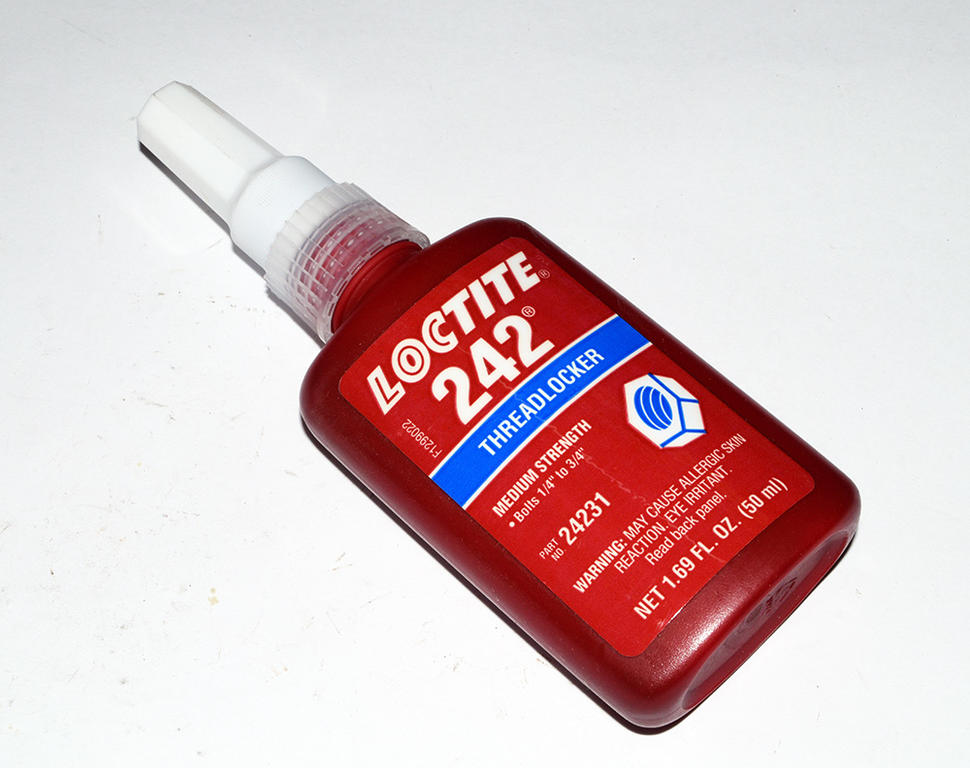
| Threadlocker | Anaerobic adhesive | Changes the torque K factor |
| Wedge-lock washer pair | Cam action | Strong vibration resistance |
Governing standards: ASME B18.21.1-2009 (R2016) (washers); product standards. Editions shown are the latest confirmed as of September 2026. The drawing and the governing standard always take precedence over this sheet.
These tables carry the same figures as the printed sheet below.
The printed sheet
See an error on this sheet?
Tell us what is wrong.
Text version of this sheet
Lock washers and locking methods
What it is
FIELD IDENTIFICATION
A split lock washer is the most common locking device and one of the least effective against vibration.
Maintaining preload is what keeps a joint tight.
SPLIT LOCK (TOP)
SIDE
Split lock washer
Locking methods compared
Method
How it works
Notes
Split lock washer
Spring tension
Little resistance to transverse vibration
Nylon-insert nut
Prevailing torque
About 250 F (121 C) max
All-metal locknut
Distorted thread
High temperature, reuse limited
Serrated flange
Bites the surface
Needs a hard mating surface
Threadlocker
Anaerobic adhesive
Changes the torque K factor
Wedge-lock washer pair
Cam action
Strong vibration resistance
Governing standards: ASME B18.21.1-2009 (R2016) (washers); product standards. Editions shown are the latest confirmed as of September 2026. The drawing and the governing
standard always take precedence over this sheet.
torquing any fastener. Verify the current governing standard, project documents, OEM requirements, size, thread, coating and lot certification. To the fullest extent permitted by law, The Fastener App disclaims liability
arising from reliance on this reference.
Fastener Guide reference FG-5CC20C · thefastenerapp.com/fastener-guide/technical-reference/lock-washers-and-locking-methods · © The Fastener App. Reference only — verify the current governing standard, drawing and manufacturer data before specifying or installing.