Black Oxide
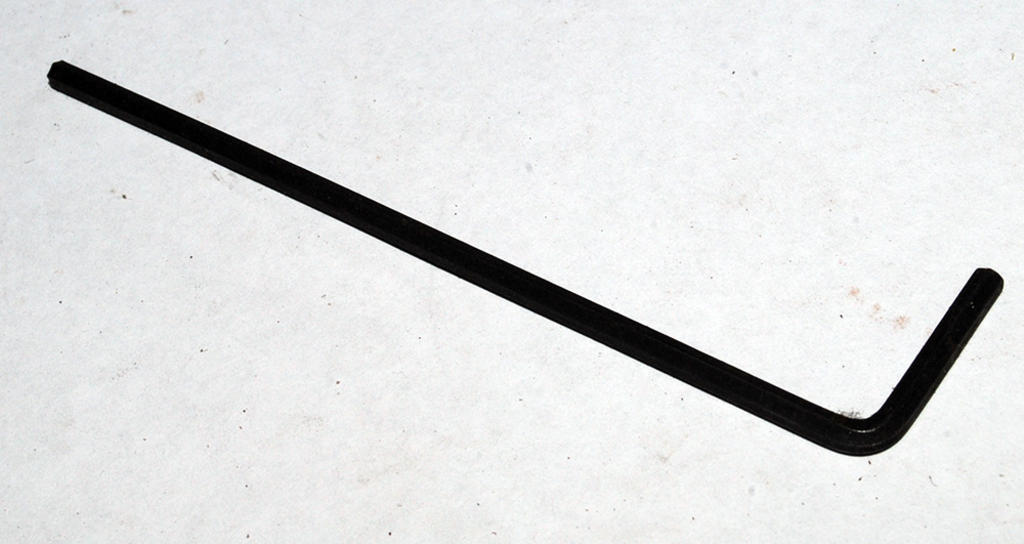
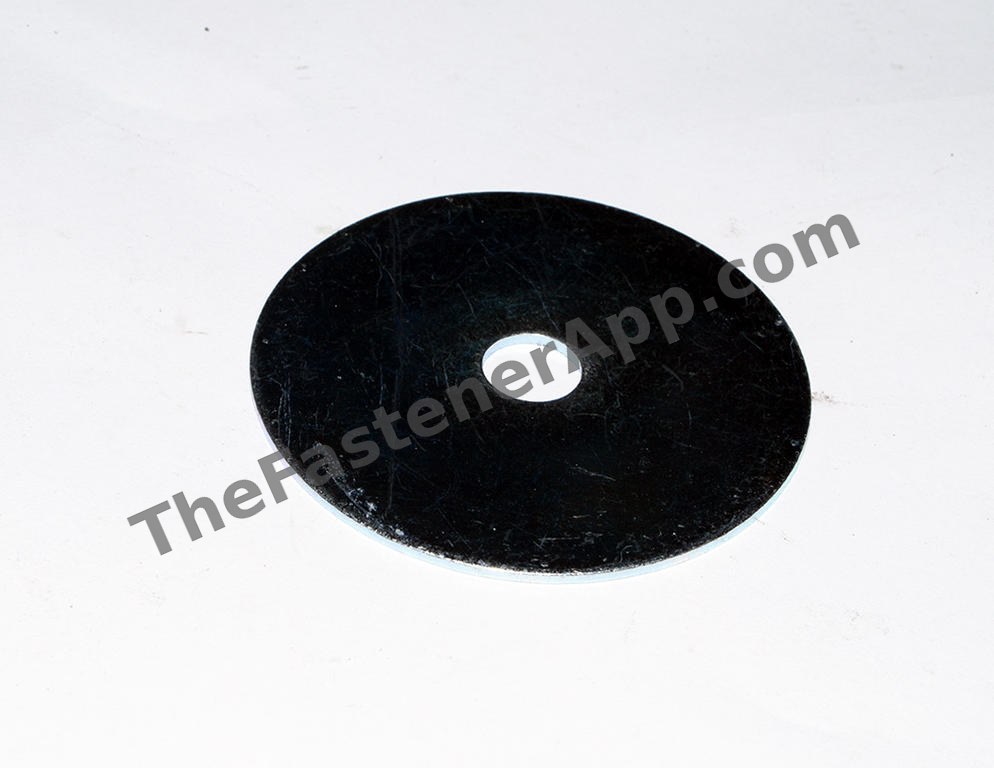
Black oxide chemically converts the surface to a thin black iron oxide. It adds almost no thickness and relies on oil or wax for its little corrosion resistance.
Black oxide at a glance
| Thickness | About 1 micrometre or less; no dimensional change |
|---|---|
| Corrosion protection | Low; only while oiled |
| Typical use | Socket screws, tools, appearance |
| Specification | MIL-DTL-13924 (steel) |
| Hydrogen risk | Very low (hot alkaline process, not electroplating) |
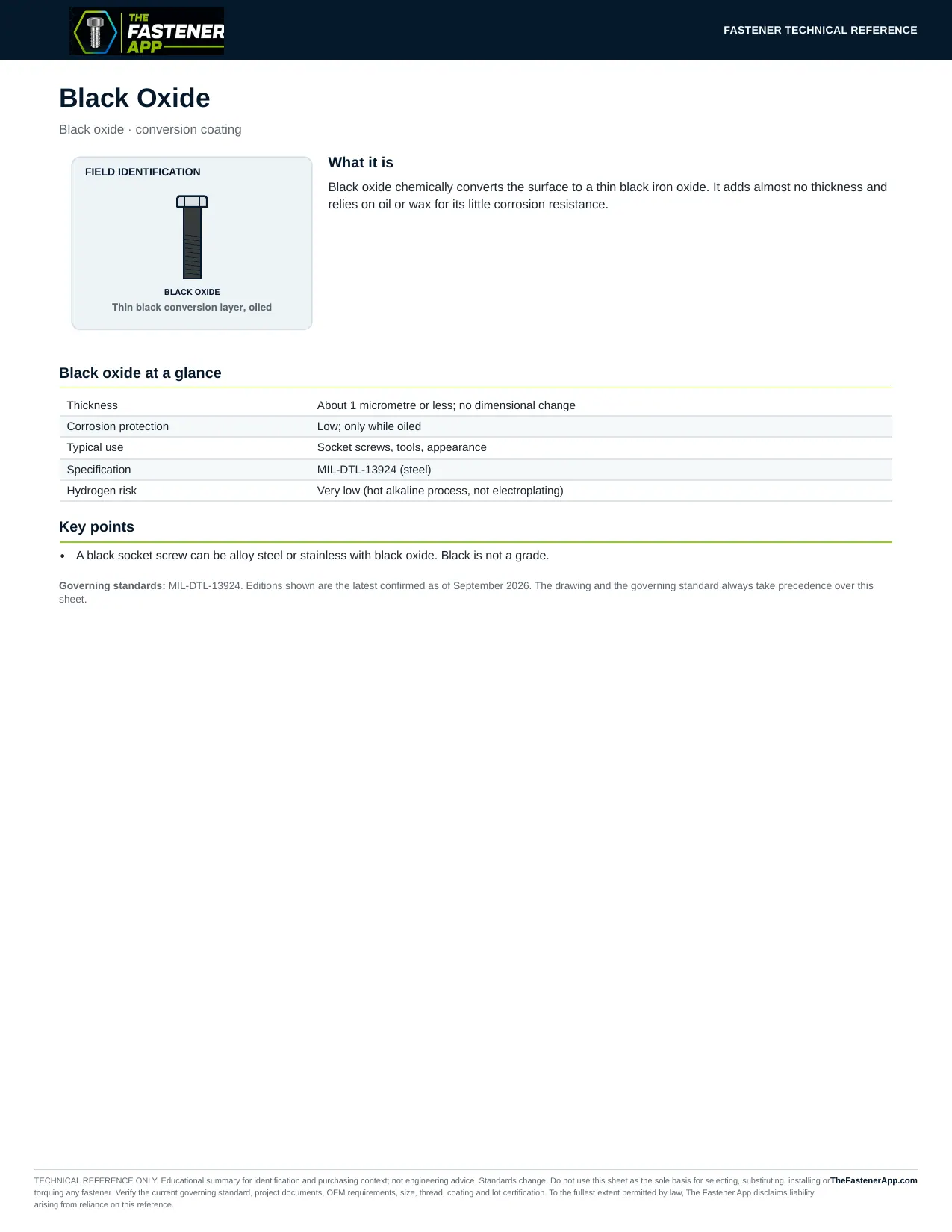
These tables carry the same figures as the printed sheet below.
The printed sheet
See an error on this sheet?
Tell us what is wrong.
Text version of this sheet
Black oxide · conversion coating
FIELD IDENTIFICATION
What it is
Black oxide chemically converts the surface to a thin black iron oxide. It adds almost no thickness and
relies on oil or wax for its little corrosion resistance.
BLACK OXIDE
Thin black conversion layer, oiled
Black oxide at a glance
Thickness
About 1 micrometre or less; no dimensional change
Corrosion protection
Low; only while oiled
Typical use
Socket screws, tools, appearance
Specification
MIL-DTL-13924 (steel)
Hydrogen risk
Very low (hot alkaline process, not electroplating)
Key points
A black socket screw can be alloy steel or stainless with black oxide. Black is not a grade.
Governing standards: MIL-DTL-13924. Editions shown are the latest confirmed as of September 2026. The drawing and the governing standard always take precedence over this
sheet.
torquing any fastener. Verify the current governing standard, project documents, OEM requirements, size, thread, coating and lot certification. To the fullest extent permitted by law, The Fastener App disclaims liability
arising from reliance on this reference.
Fastener Guide reference FG-F4CB5B · thefastenerapp.com/fastener-guide/plating-coatings-finishes/black-oxide · © The Fastener App. Reference only — verify the current governing standard, drawing and manufacturer data before specifying or installing.