Corrosion Failure
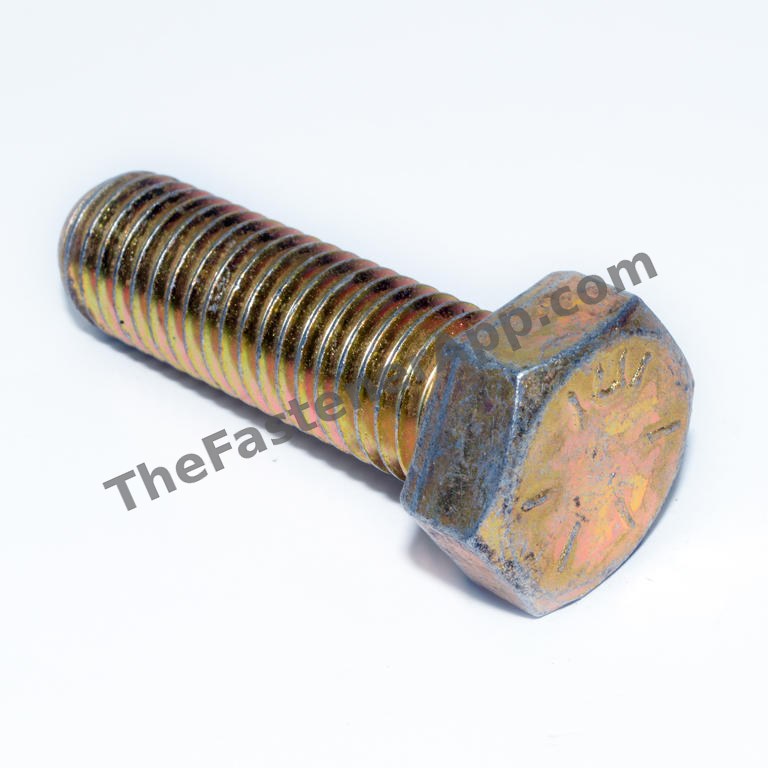
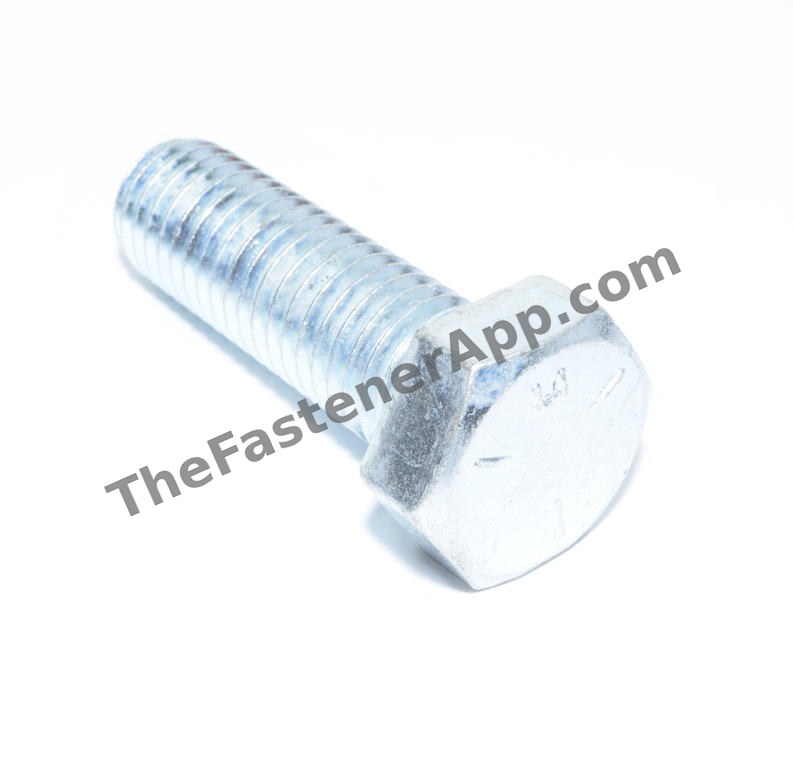
Corrosion failures come from the wrong material or finish for the environment, galvanic couples, or crevices that trap moisture.
Corrosion types
| Type | What happens | Fix |
|---|---|---|
| General | Uniform rusting | Heavier coating or better material |
| Galvanic | Less noble metal corrodes in contact | Match metals or isolate them |
| Crevice | Attack under washers and in gaps | Drainage, sealants, 316 or better |
| Pitting | Local pits in stainless (chlorides) | 316, duplex or nickel alloy |
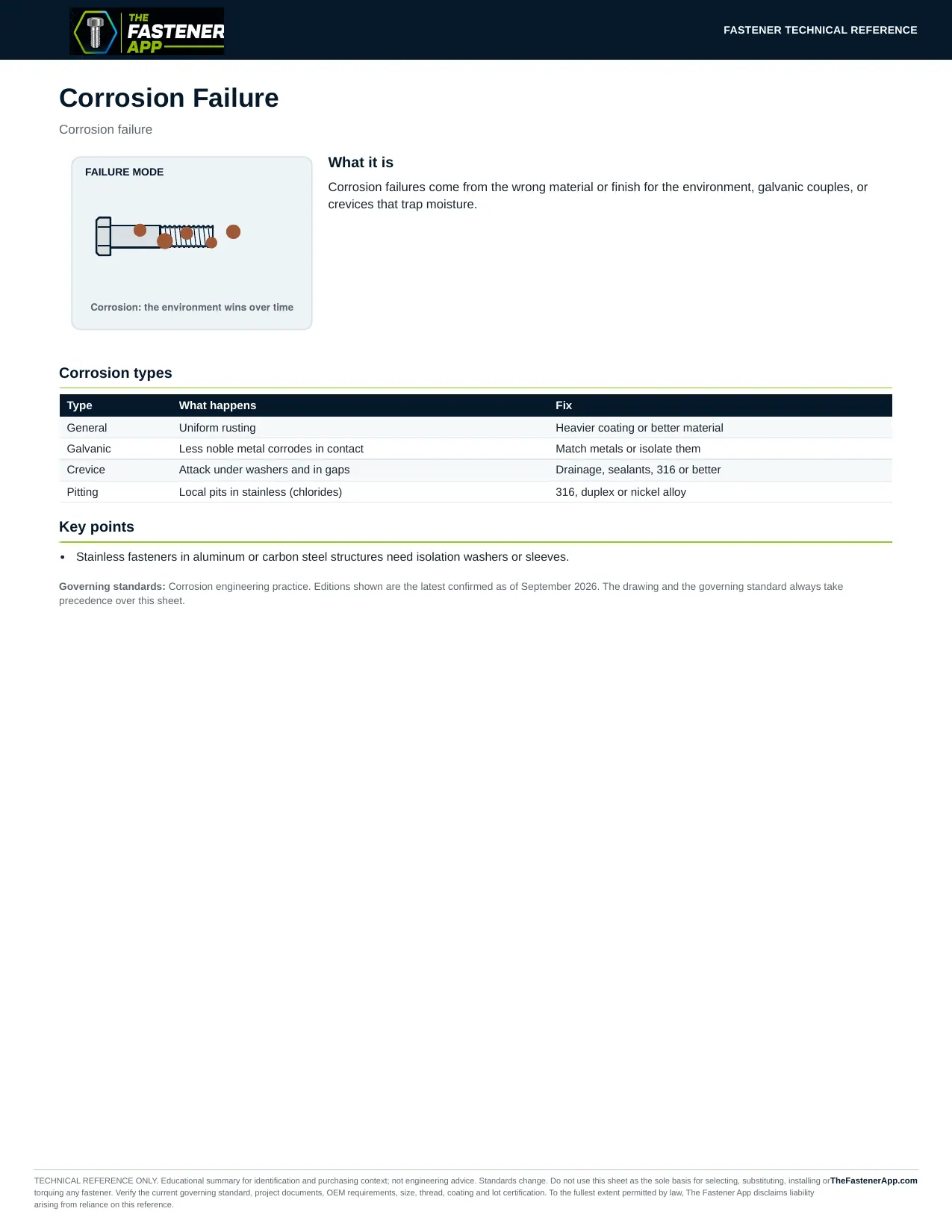
These tables carry the same figures as the printed sheet below.
The printed sheet
See an error on this sheet?
Tell us what is wrong.
Text version of this sheet
Corrosion failure
What it is
FAILURE MODE
Corrosion failures come from the wrong material or finish for the environment, galvanic couples, or
crevices that trap moisture.
Corrosion: the environment wins over time
Corrosion types
Type
What happens
Fix
General
Uniform rusting
Heavier coating or better material
Galvanic
Less noble metal corrodes in contact
Match metals or isolate them
Crevice
Attack under washers and in gaps
Drainage, sealants, 316 or better
Pitting
Local pits in stainless (chlorides)
316, duplex or nickel alloy
Key points
Stainless fasteners in aluminum or carbon steel structures need isolation washers or sleeves.
Governing standards: Corrosion engineering practice. Editions shown are the latest confirmed as of September 2026. The drawing and the governing standard always take
precedence over this sheet.
torquing any fastener. Verify the current governing standard, project documents, OEM requirements, size, thread, coating and lot certification. To the fullest extent permitted by law, The Fastener App disclaims liability
arising from reliance on this reference.
Fastener Guide reference FG-CEA552 · thefastenerapp.com/fastener-guide/failure-analysis/corrosion-failure · © The Fastener App. Reference only — verify the current governing standard, drawing and manufacturer data before specifying or installing.