Thread-Locking Compounds
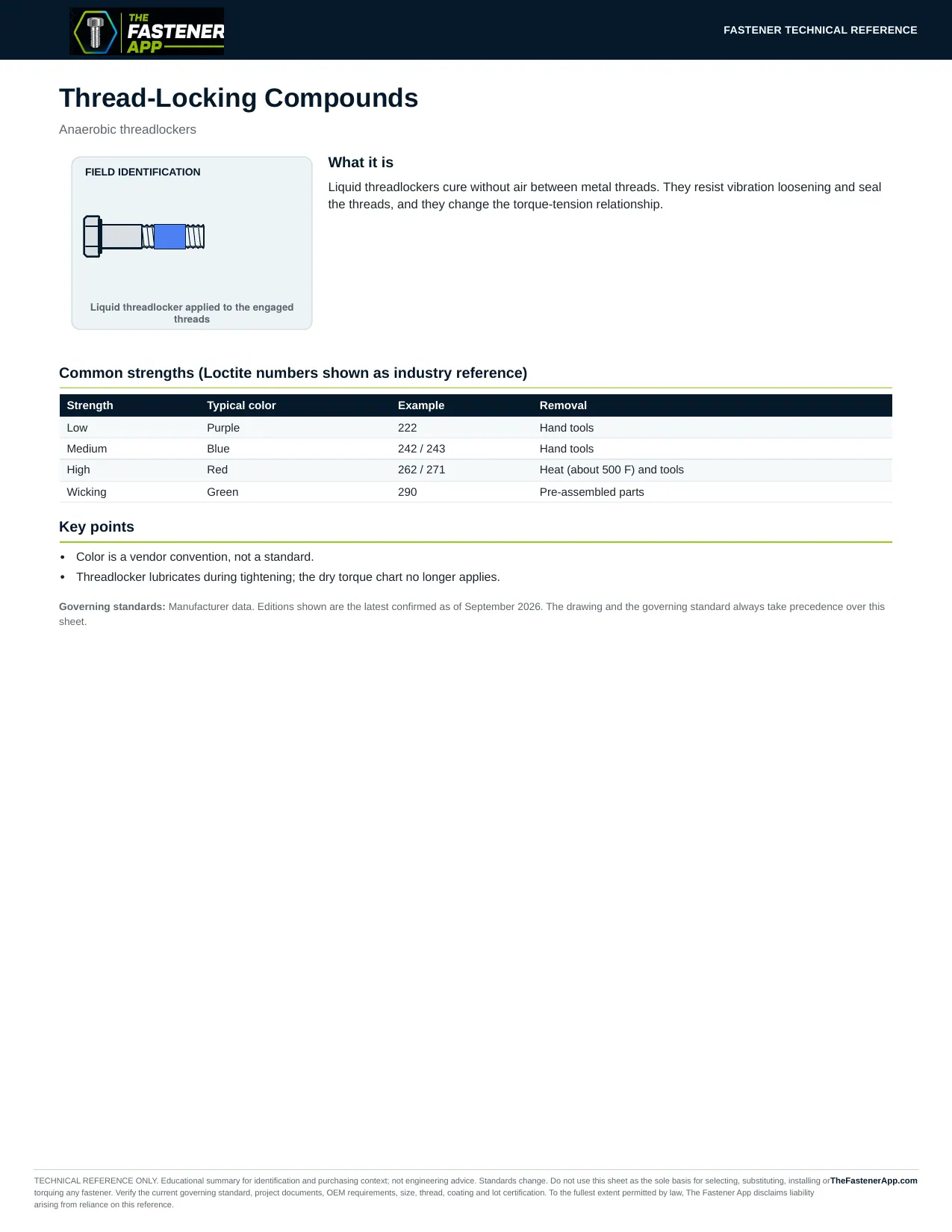
Liquid threadlockers cure without air between metal threads. They resist vibration loosening and seal the threads, and they change the torque-tension relationship.
Common strengths (Loctite numbers shown as industry reference)
| Strength | Typical color | Example | Removal |
|---|---|---|---|
| Low | Purple | 222 | Hand tools |
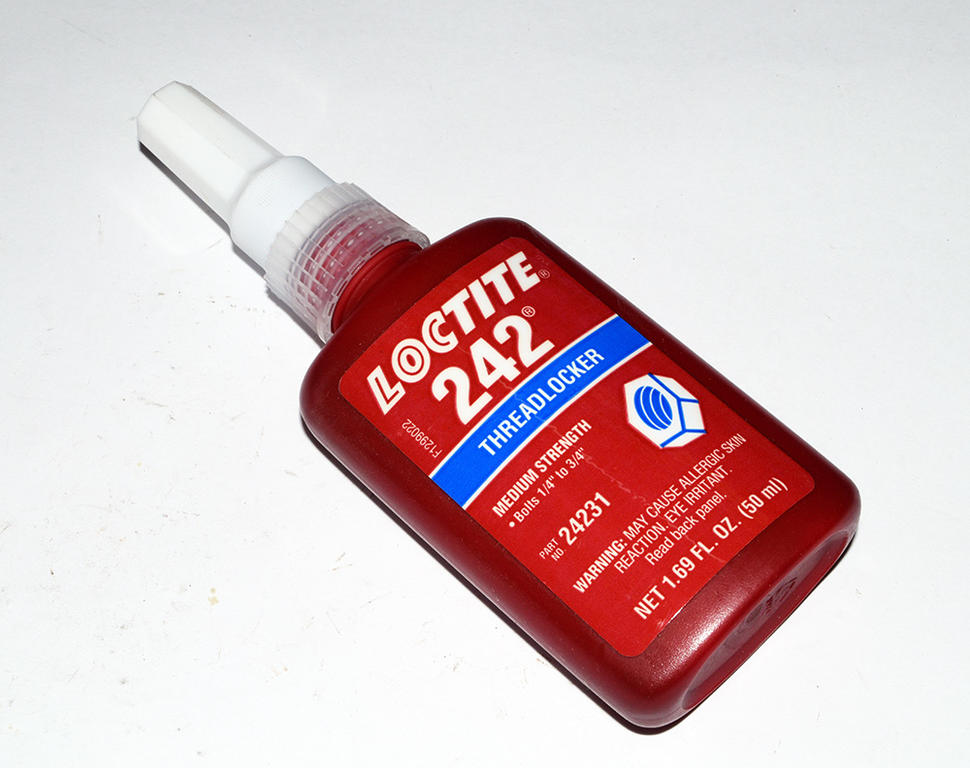
| Medium | Blue | 242 / 243 | Hand tools |
| High | Red | 262 / 271 | Heat (about 500 F) and tools |
| Wicking | Green | 290 | Pre-assembled parts |
These tables carry the same figures as the printed sheet below.
The printed sheet
See an error on this sheet?
Tell us what is wrong.
Text version of this sheet
Anaerobic threadlockers
What it is
FIELD IDENTIFICATION
Liquid threadlockers cure without air between metal threads. They resist vibration loosening and seal
the threads, and they change the torque-tension relationship.
Liquid threadlocker applied to the engaged
threads
Common strengths (Loctite numbers shown as industry reference)
Strength
Typical color
Example
Removal
Low
Purple
222
Hand tools
Medium
Blue
242 / 243
Hand tools
High
Red
262 / 271
Heat (about 500 F) and tools
Wicking
Green
290
Pre-assembled parts
Key points
Color is a vendor convention, not a standard.
Threadlocker lubricates during tightening; the dry torque chart no longer applies.
Governing standards: Manufacturer data. Editions shown are the latest confirmed as of September 2026. The drawing and the governing standard always take precedence over this
sheet.
torquing any fastener. Verify the current governing standard, project documents, OEM requirements, size, thread, coating and lot certification. To the fullest extent permitted by law, The Fastener App disclaims liability
arising from reliance on this reference.
Fastener Guide reference FG-277C1E · thefastenerapp.com/fastener-guide/technical-reference/thread-locking-compounds · © The Fastener App. Reference only — verify the current governing standard, drawing and manufacturer data before specifying or installing.